


Your amp sounds thin, like a mosquito trapped in a glass jar, and your rhythm parts lack that gut-punching authority you crave. You need something to push the air and saturate your signal with raw, aggressive gain.
The Best Distortion Pedals for Metal act like a heavy iron gate, transforming weak signals into thick walls of sound. Finding the right grit for your rig requires knowing exactly how these circuits carve out your frequency range. Keep reading to see which models hold the most weight for your signal chain.
Key Takeaways
- Prioritize pedals with active EQ sections because they allow you to scoop mids for that classic thrash sound.
- Confirm your power supply voltage matches the pedal requirements to avoid unwanted noise or internal damage.
- Check if the pedal features true bypass circuitry to ensure your clean tone stays pure when the effect is off.
- Consider whether you prefer a mini housing for pedalboard space or a larger enclosure for easier battery access.
- Look for additional boost modes if you need to switch between rhythm crunch and soaring lead tones instantly.
| Budget Friendly Brutality |  |
Rowin Analog Heavy Metal Distortion | Extremely compact footprint | Thick analog saturation | Solid metal construction | View on Amazon | Read Review |
| The Industry Standard |  |
Boss MT-2 Metal Zone | Extensive active EQ | Dual gain circuit | Legendary durability | View on Amazon | Read Review |
| Versatile Gain Monster | 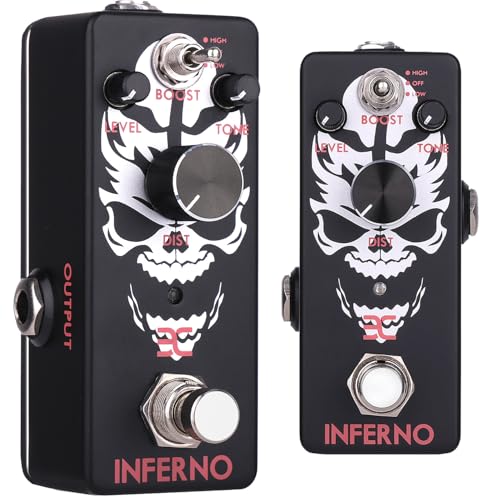 |
EX Inferno Death Metal Distortion | Three distinct boost modes | Massive gain range | Small space-saving design | View on Amazon | Read Review |
| Iconic Chainsaw Tone | 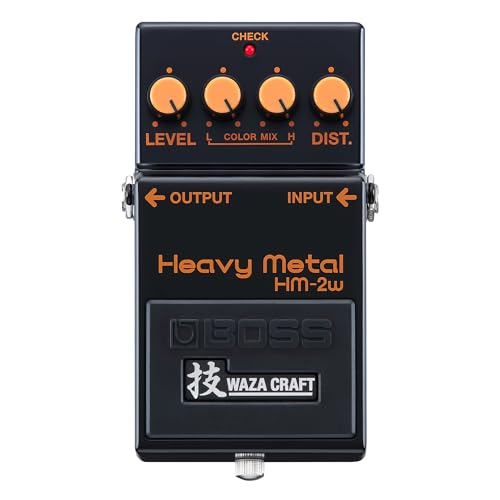 |
Boss HM-2W Waza Craft | Authentic Swedish death metal | Flexible custom mode | Premium build quality | View on Amazon | Read Review |
| Flexible Dual Voice |  |
Strich Warcry Metal Distortion | Dual voicing modes | Modern and classic sounds | Sturdy metal construction | View on Amazon | Read Review |
| High Gain Value | 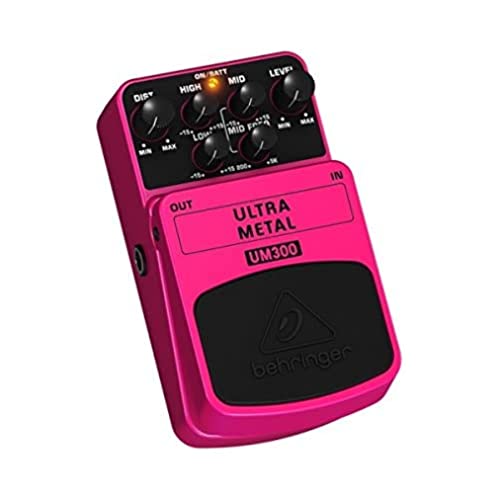 |
Behringer UM300 Heavy Metal | Incredible value | Scoopable mid-range | Dedicated low and high controls | View on Amazon | Read Review |
| Compact Classic Crunch |  |
Donner Morpher Mini Distortion | Three versatile modes | Very compact size | Tight harmonic response | View on Amazon | Read Review |
| Studio Grade Flexibility |  |
Joyo High Gain Distortion | Wide frequency response | Full range EQ | Durable analog circuitry | View on Amazon | Read Review |
| Low Profile Power | 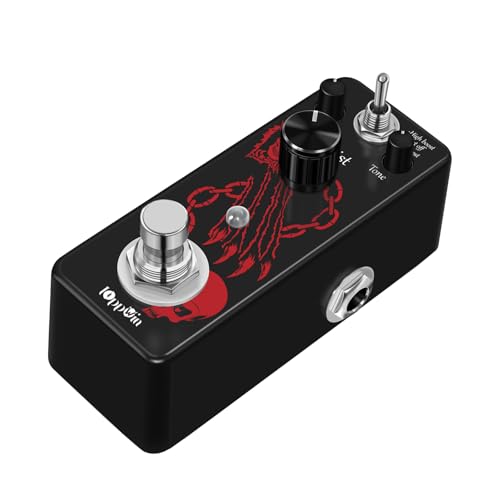 |
IOppWin Holy War Distortion | Extremely small footprint | Built-in boost options | Sturdy metal housing | View on Amazon | Read Review |
| Practice Room Hero |  |
Muff Top Boost Distortion | Integrated headphone output | Vintage tone modes | Direct silent practice capability | View on Amazon | Read Review |
More Details on Our Top Picks
-
Rowin Analog Heavy Metal Distortion
This pedal is a fantastic starting point for players who need high-gain aggression without taking up valuable real estate on a pedalboard. Its compact size hides a surprisingly thick sound that works well for classic heavy metal riffs.
The simplicity here is a major benefit. You get a direct, no-frills signal path that focuses on sustain and crunch. Just be aware that the small housing can make precision adjustments tricky if you have large boots on stage.
- Brand:Rowin
- Pedal Type:Distortion
- Circuit Design:Analog
- Bypass Type:True Bypass
- Additional Feature:Micro sized metal chassis
- Additional Feature:Simple three knob layout
- Additional Feature:LED indicator light
-
Boss MT-2 Metal Zone
Few pedals are as recognizable as the Metal Zone. It acts as a surgical tool for EQ, giving you an immense amount of control over your midrange frequencies, which is essential if you want to dial in a modern, scooped metal tone.
Because of its dual-concentric knobs, you can shape your sound with extreme precision. It is not for the faint of heart, as the sheer amount of gain on tap can become unruly if you do not balance the levels carefully.
- Brand:Boss
- Pedal Type:Distortion
- Circuit Design:Analog
- Enclosure Size:Compact
- Control Options:4-Knob plus dual-concentric
- Bypass Type:Buffered
- Additional Feature:High output level
- Additional Feature:Mid-frequency sweep control
- Additional Feature:Rugged metal housing
-
EX Inferno Death Metal Distortion
If you lean toward the darker side of music, this pedal offers a crushing wall of sound. The integrated three-mode boost switch acts like a gear shifter for your guitar, allowing you to move from tight, rhythmic chugging to wild, saturated leads instantly.
The mini form factor is efficient for crowded boards. While it excels at extreme metal genres, the boost settings add enough variety to make it useful for hard rock applications as well.
- Brand:EX
- Pedal Type:Distortion
- Circuit Design:Analog
- Bypass Type:True Bypass
- Additional Feature:Three-mode boost switch
- Additional Feature:Heavy duty alloy casing
- Additional Feature:High-gain output
-
Boss HM-2W Waza Craft
This is a high-end reimagining of a Swedish death metal classic. It provides that specific, gritty texture that defined the genre in the late eighties, but it adds a modern custom mode for improved definition and a wider dynamic range.
The color mix controls allow you to stack your high and low frequencies independently. It is definitely a specialist pedal, but for the specific sound it targets, nothing else comes close to this level of authenticity.
- Brand:Boss
- Pedal Type:Distortion
- Circuit Design:Analog Waza Craft
- Control Options:4-Knob plus switches
- Bypass Type:Buffered
- Additional Feature:Custom and standard modes
- Additional Feature:Independent color mix controls
- Additional Feature:Five-year warranty
-
Strich Warcry Metal Distortion
The Warcry provides two distinct flavors of metal distortion in one box. By flipping a switch, you jump between extreme modern distortion and a classic, scooped eighty-style sound, making it a great utility pedal for players who cover multiple eras.
Its construction is sturdy enough for frequent travel. You might find that the volume jump between the two modes requires a quick tweak on the level knob, but the sonic versatility is worth the minor adjustment.
- Brand:Strich
- Pedal Type:Distortion
- Circuit Design:Analog
- Bypass Type:True Bypass
- Additional Feature:Extreme and classic settings
- Additional Feature:LED indicator light
- Additional Feature:Compact design
-
Behringer UM300 Heavy Metal
Behringer has packed a massive amount of distortion into a lightweight unit here. It is ideal for someone who wants to experiment with heavy tones without spending a fortune, providing a scooped sound that stays tight even at high gain levels.
The controls are very responsive, allowing you to sculpt your mids effectively. While the plastic housing requires a bit of care during heavy foot traffic, the electronic performance is surprisingly punchy for the price.
- Brand:Behringer
- Pedal Type:Distortion
- Circuit Design:Analog
- Control Options:4-Knob plus dual-concentric
- Bypass Type:Buffered
- Additional Feature:LED status light
- Additional Feature:Dedicated high and low EQ
- Additional Feature:High gain output
-
Donner Morpher Mini Distortion
This pedal is a chameleon, fitting into almost any pedalboard corner. It features three separate modes, including a tight setting that keeps your notes distinct even when you are playing fast, complex metal riffs.
The natural mode is great for a more organic, amplifier-like distortion that feels very responsive under your fingers. It is not designed for doom or sludge, but for classic metal and hard rock, it performs admirably.
- Brand:Donner
- Pedal Type:Distortion
- Circuit Design:Analog
- Bypass Type:True Bypass
- Additional Feature:Aluminum alloy housing
- Additional Feature:Three-way toggle switch
- Additional Feature:LED status indicator
-
Joyo High Gain Distortion
The Joyo JF-04 is a workhorse that covers a surprisingly wide ground. It uses an analog circuit that keeps your guitar signal warm, while the full-range EQ allows you to push the presence for cutting leads or pull it back for heavy rhythms.
This pedal feels substantial under the foot. It is a reliable choice for anyone who wants a consistent, classic high-gain sound that handles both bridge and neck pickups with clarity.
- Brand:Joyo
- Pedal Type:Distortion
- Circuit Design:Analog
- Bypass Type:True Bypass
- Additional Feature:High and low EQ controls
- Additional Feature:Rugged metal chassis
- Additional Feature:Classic gain stage
-
IOppWin Holy War Distortion
If you are struggling with a crowded board, this mini pedal is a savior. It offers a high boost and low boost option, giving you the ability to thicken up your signal or add a sharp edge for solos without needing an external booster.
The metal casing feels like it could survive a drop from a stage, which is impressive for such a tiny unit. The knobs are small, so you might want to use a marker to track your favorite settings.
- Brand:IOppWin
- Pedal Type:Distortion
- Circuit Design:Analog
- Bypass Type:True Bypass
- Additional Feature:Lo and Hi boost switches
- Additional Feature:Mini pedal design
- Additional Feature:LED status indicator
-
Muff Top Boost Distortion
This unit stands out because it includes an earphone output, making it perfect for silent practice late at night. It captures those iconic eighties and nineties metal tones with a dedicated muffler switch that helps tame harsh high-end frequencies.
It is surprisingly simple to operate and provides a very direct sound. While it works well in a regular rig, the ability to plug your headphones directly into the pedal is the standout feature for anyone living in an apartment.
- Brand:Unbranded (Generic)
- Pedal Type:Distortion
- Circuit Design:Analog
- Bypass Type:True Bypass
- Additional Feature:Muff top boost switch
- Additional Feature:80s and 90s modes
- Additional Feature:Headphone-ready output jack
Frequently Asked Questions
Can I get a professional metal tone using only a distortion pedal?
You can certainly get close, but remember that your amplifier choice plays a massive role in the final result. A distortion pedal works best when it pushes a slightly overdriven tube amp into high-gain territory. If you are playing through a small, clean solid-state amp, the pedal will provide the grit, but it might lack the natural harmonic resonance of a cranked stack.
Should I place my distortion pedal before or after my delay?
Place your distortion before your delay for a cleaner, more rhythmic sound. If you put distortion after a delay, the pedal will distort the repeats of your echoes, which often results in a muddy, chaotic mess. Keep your signal path organized to maintain clarity during fast passages.
What is the difference between overdrive, distortion, and fuzz?
Overdrive mimics the sound of a tube amp pushed to its limits, offering a softer clipping that retains your picking dynamics. Distortion uses hard clipping to create a saturated, aggressive sound that is essential for most metal subgenres. Fuzz is a different beast entirely, as it heavily compresses the signal into a thick, wall-of-sound texture that sounds like a broken speaker.
Why does my pedal sound noisy when the gain is turned up?
High-gain pedals amplify everything, including the 60-cycle hum from your single-coil pickups and the ambient noise in your room. Use a noise gate pedal to silence the signal when you are not playing. This simple addition removes the hiss while you hold long, sustained notes.
Do I need to worry about impedance when choosing a pedal?
Guitar pickups have a high output impedance that needs to be matched by the input impedance of your pedal. Most modern distortion pedals are designed to handle this perfectly without any loss of treble frequencies. If you keep your cables under 20 feet, you will rarely experience issues with signal degradation.