


Many people assume that a larger speaker cabinet always produces better audio accuracy. This is a trap, especially when working in a cramped bedroom or a small office where bass buildup can ruin your mix.
Focusing on clarity and a flat frequency response matters far more than raw volume. Finding the Best Cheap Studio Monitors requires a careful look at your specific workspace dimensions. Let me help you sort through the noise.
Key Takeaways
- Prioritize monitors with a rear-facing port design if you have space to pull them away from the wall to prevent low-end boom.
- Check for balanced TRS inputs to ensure you can connect to your audio interface without picking up interference from other electronics.
- Ignore marketing claims about bass performance if the woofer size is smaller than three inches, as physics limits how low these speakers can truly reach.
- Opt for models with physical tone controls on the front or back so you can adjust the output to match the acoustics of your room.
- Verify the total power output listed in the product title, but remember that clean sound at moderate levels is more useful than distortion at max volume.
| Top Tier Accuracy |  |
KRK Kreate 3 Powered Monitors | Extremely accurate frequency response | Compact footprint | Professional sonic clarity | View on Amazon | Read Review |
| Versatile Desktop Staple |  |
PreSonus Eris 3.5 Active Monitors | Smooth high frequency response | Compact for small desks | Versatile input options | View on Amazon | Read Review |
| Wireless Connectivity Choice |  |
Ortizan C7 Bluetooth Studio Monitors | Convenient wireless Bluetooth | Dual-mode input switching | User-friendly setup | View on Amazon | Read Review |
| Modern Connectivity Hub |  |
Edifier MR3 Hi-Res Powered Monitors | High-resolution audio support | Balanced TRS inputs | Front headphone jack | View on Amazon | Read Review |
| Balanced Reference Sound | 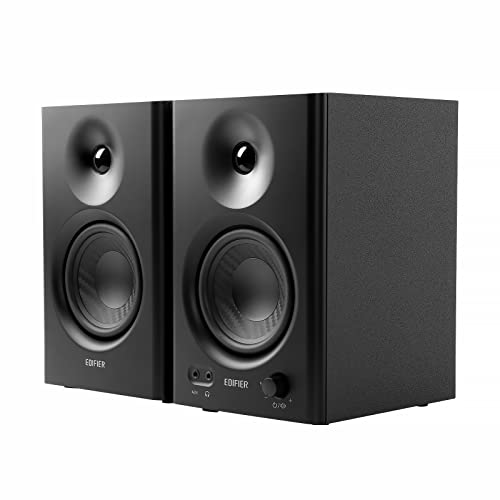 |
Edifier MR4 4-Inch Reference Monitors | Accurate reference response | Solid 4-inch driver | Natural sound reproduction | View on Amazon | Read Review |
| Flexible Tone Shaping |  |
Mackie CR3.5 Creative Reference Monitors | Handy tone adjustment | Flexible location switch | Great for multimedia | View on Amazon | Read Review |
| Powerhouse Multimedia Option |  |
OHAYO 60W Active Bluetooth Monitors | High power output | Multiple input choices | Strong wireless performance | View on Amazon | Read Review |
| Starter Production Kit |  |
M-AUDIO BX3 Compact Studio Monitors | Ideal for beginners | Included production software | Reliable clarity | View on Amazon | Read Review |
| Professional Legacy Sound |  |
Yamaha HS3 Powered Reference Monitors | Professional flat response | Excellent build quality | Consistent sonic signature | View on Amazon | Read Review |
| Deep Bass Authority | 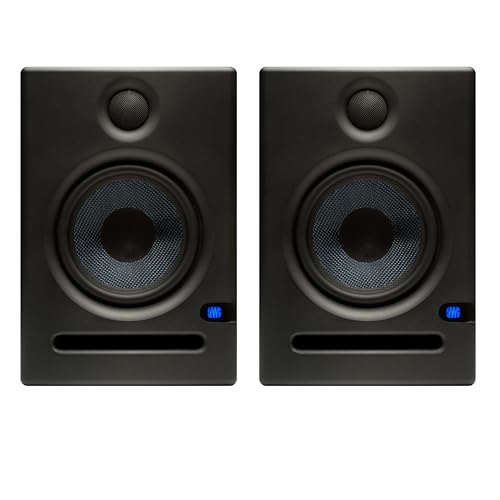 |
PreSonus Eris E5 Studio Monitors | Superior bass response | Wide frequency range | Professional-grade output | View on Amazon | Read Review |
More Details on Our Top Picks
-
KRK Kreate 3 Powered Monitors
If you want a transparent sound profile that helps you hear exactly what is happening in your mix, these are the gold standard for small spaces. They provide a crisp high end and balanced mids that act like a magnifying glass for your audio.
You might find the low-frequency response a bit modest if you are used to larger subwoofers. However, for precise editing and critical listening, they perform better than almost anything else in this size category.
- Brand Name:KRK
- Driver Size:3 inches
- Additional Feature:Powered internal amplification
- Additional Feature:Near field optimization
- Additional Feature:Durable enclosure design
-
PreSonus Eris 3.5 Active Monitors
These speakers are the workhorse of home studios because they handle everything from gaming to basic music production with ease. The silk-dome tweeter produces smooth highs that do not fatigue your ears during long sessions.
Keep in mind that these are entry-level units, so they lack the deep, punchy sub-bass needed for heavy electronic dance music. They are highly reliable for producers who need a neutral reference point on a crowded desk.
- Brand Name:PreSonus
- Driver Size:3.5 inches
- Total Power:50W
- Material Composition:Woven-composite woofer
- Additional Feature:Active amplification
- Additional Feature:Near field design
- Additional Feature:Multi-purpose audio playback
-
Ortizan C7 Bluetooth Studio Monitors
Sometimes you just want to get to work without worrying about finding the right cable. These monitors include Bluetooth 5.3, which makes them a flexible solution for both wired production and casual wireless streaming.
The dual-mode functionality ensures you can switch between sources without fumbling behind the speakers. Just be aware that wireless connections can occasionally introduce minor latency, so keep them hard-wired for serious recording sessions.
- Brand Name:Ortizan
- Connection Types:Bluetooth 5.3, Wired
- Additional Feature:Active monitor system
- Additional Feature:Near field optimization
- Additional Feature:Desktop-friendly size
-
Edifier MR3 Hi-Res Powered Monitors
If your setup involves a mix of computers, instruments, and headphones, these speakers are a smart central hub. They are certified for high-resolution audio and include a front-facing headphone output that simplifies your workflow.
The inclusion of balanced TRS inputs is a major plus for reducing background noise in your signal chain. While they provide a wide soundstage, they are best suited for smaller rooms rather than large mixing suites.
- Brand Name:Edifier
- Connection Types:Bluetooth 5.4, TRS, RCA, AUX
- Additional Feature:Active bookshelf design
- Additional Feature:Modern connectivity standards
- Additional Feature:Hi-Res audio certified
-
Edifier MR4 4-Inch Reference Monitors
These speakers strike an excellent balance between detailed accuracy and a pleasant listening experience. The 4-inch driver provides a bit more mid-range warmth than smaller 3-inch models, making them sound less thin in open spaces.
You will appreciate the straightforward design, though the controls are located on the rear panel. This makes them slightly less convenient to adjust if you have them pushed against a wall.
- Brand Name:Edifier
- Driver Size:4 inches
- Additional Feature:Active reference technology
- Additional Feature:Compact cabinet footprint
- Additional Feature:Consistent audio output
-
Mackie CR3.5 Creative Reference Monitors
When you need to adjust your sound on the fly, the integrated tone knob on these monitors is a lifesaver. They are designed for creators who jump between gaming, music editing, and video post-production.
The location switch helps you customize the response based on where you place them on your desk. They offer a punchy sound that is very engaging, though purists might find them slightly colored compared to flat monitors.
- Brand Name:Mackie
- Driver Size:3.5 inches
- Additional Feature:Active powered design
- Additional Feature:Creative reference tuning
- Additional Feature:Versatile application support
-
OHAYO 60W Active Bluetooth Monitors
These speakers pack a surprising amount of punch with 60W of power, making them perfect for those who want a fuller sound for gaming and music playback. The Bluetooth 5.3 integration adds a level of modern convenience that makes connecting your phone or tablet simple.
They are designed more for high-volume entertainment than surgical mixing accuracy. If your goal is to fill the room with sound, these will certainly get the job done.
- Brand Name:OHAYO
- Connection Types:Bluetooth 5.3, 3.5mm, RCA, USB
- Total Power:60W
- Additional Feature:Active stereo system
- Additional Feature:Desktop-ready footprint
- Additional Feature:Simple input switching
-
M-AUDIO BX3 Compact Studio Monitors
For those just beginning to record music at home, these monitors are a dependable starting point. They provide a clear, honest representation of your audio and include software to get your home studio up and running.
The smaller driver size means you should not expect deep sub-bass performance. However, for tracking and learning the basics of sound, they offer great value for the footprint they take up.
- Brand Name:M-AUDIO
- Driver Size:3.5 inches
- Additional Feature:Near field monitors
- Additional Feature:Multimedia capable
- Additional Feature:Wired connectivity
-
Yamaha HS3 Powered Reference Monitors
Yamaha is famous for their white-coned monitors, and these smaller units bring that professional lineage to your desktop. They offer a very flat frequency response that is essential if you want your mixes to sound good on other systems.
Because they focus on absolute honesty, they do not flatter your music. Do not expect heavy bass enhancement here, as these are built for analytical work above all else.
- Brand Name:Yamaha
- Additional Feature:Powered reference design
- Additional Feature:Near field optimized
- Additional Feature:Iconic studio aesthetic
-
PreSonus Eris E5 Studio Monitors
If you need more than just a desktop speaker, these 5.25-inch monitors provide the low-end extension that smaller units simply cannot reach. They act like a bridge between compact desktop speakers and large, room-filling studio monitors.
The larger size does mean you need more desk real estate to accommodate them. However, if you are serious about hearing your bass correctly, the extra size is a necessary trade-off.
- Brand Name:PreSonus
- Driver Size:5.25 inches
- Additional Feature:Two-way active design
- Additional Feature:Near field performance
- Additional Feature:Room-filling volume
Frequently Asked Questions
Do I need a separate subwoofer for my studio monitors?
In most small rooms, you do not need a subwoofer. A decent pair of 5-inch or 7-inch monitors can usually provide enough bass information for accurate mixing. Adding a subwoofer often makes a small room sound worse by introducing standing waves that are difficult to control. Stick to a main pair of monitors first.
What is the difference between active and passive monitors?
Active monitors have a built-in amplifier, meaning you just plug them into a power outlet and your audio source. This is the standard for home studios because it simplifies your setup and ensures the amp is perfectly matched to the drivers. Passive monitors require a separate power amplifier to function. Most beginners should stick with active models to avoid the headache of choosing compatible gear.
Can I use regular home stereo speakers for mixing?
Home stereo speakers are designed to make music sound pleasant, often by coloring the audio with boosted bass or bright highs. This "hi-fi" sound hides mistakes in your mix rather than revealing them. Studio monitors are built for transparency and honesty. If you use stereo speakers, you will likely find that your finished tracks sound thin or unbalanced when played on other systems.
How far apart should I place my monitors?
Aim for an equilateral triangle setup where the distance between the two speakers is the same as the distance from each speaker to your head. This creates a solid stereo image and ensures you are sitting in the "sweet spot." Angle the monitors inward so the tweeters point directly at your ears. This simple geometry helps you hear the high-frequency details clearly.
Should I buy monitor stands or just put them on my desk?
Placing monitors directly on a desk causes vibrations that muddy the sound and create unwanted resonance. If you must use a desk, put your speakers on foam isolation pads to decouple them from the surface. Dedicated stands are the better option because they allow you to position the tweeters at ear level. This adjustment is one of the most effective ways to improve your monitoring accuracy.