

Your teenager sits at the kitchen table, staring at a stack of college brochures while calculating the exact years left until they can start clinical rotations. The pressure to secure a spot in a medical school right out of high school feels like a high stakes chess game.
Picking the Best Bs Md Programs requires a clear strategy. These resources serve as your compass through the competitive admissions process. Read on to see which guides help you map out a successful path to a medical career.
Key Takeaways
- Prioritize guides that offer specific timelines for standardized test preparation and extracurricular scheduling.
- Look for resources that break down the acceptance rates for individual university partnerships to help manage your expectations.
- Choose books that provide interview preparation strategies specifically tailored to medical school candidates.
- Ensure the material includes advice on personal statements that emphasize clinical interest rather than just academic achievement.
- Verify that the publication date is recent to account for shifts in admission criteria and program availability.
| Top Ranked Resource |  |
Comprehensive Guide to BS/MD Admissions | Clear application roadmap | Detailed timeline guidance | Strategic admissions advice | View on Amazon | Read Review |
| Practical Application Handbook |  |
Getting Into Medical School Early | Tactical application steps | Focus on documentation | Efficient procedural overview | View on Amazon | Read Review |
| Strategic Planning Manual | 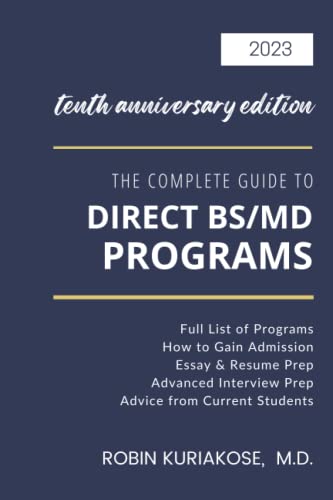 |
Understanding Direct Combined Programs | Academic standing assessment | Institutional differentiation | Rigorous preparation focus | View on Amazon | Read Review |
| Comprehensive Success Blueprint |  |
Ultimate Guide to BSMD Programs | Early intervention focus | Competitive profile building | Broad program coverage | View on Amazon | Read Review |
| Essential Admissions Companion |  |
High School to Medical School | Essay writing framework | Interview practice tips | Structured transition advice | View on Amazon | Read Review |
| Tactical Selection Tool |  |
Direct Medical Entry Guide | Institutional filtering | Comparative program analysis | Logistical organization | View on Amazon | Read Review |
| Focused Skill Builder |  |
BS/MD Application Success Guide | Interview skill development | Motivation articulation training | Committee perspective insights | View on Amazon | Read Review |
| Academic Readiness Guide |  |
Combined Programs Roadmap | Academic rigor overview | Realistic workload expectations | Long term career perspective | View on Amazon | Read Review |
| Current Strategy Reference | 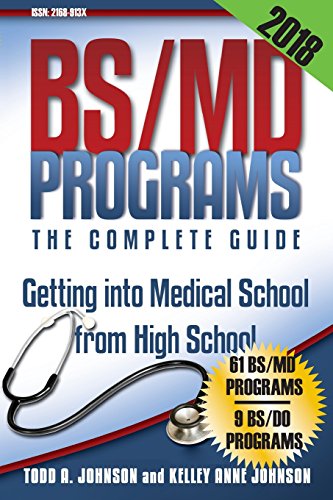 |
Modern BS/MD Admissions Manual | Modern strategy insights | Extracurricular leverage | Competitive advantage building | View on Amazon | Read Review |
| Systematic Planning Guide |  |
BS/MD Preparation Handbook | Systematic process flow | Task-based organization | Comprehensive material guide | View on Amazon | Read Review |
More Details on Our Top Picks
-
Comprehensive Guide to BS/MD Admissions
If you are planning to bypass the traditional medical school application cycle, this book serves as your foundational roadmap. It excels at breaking down the complex timeline required for high schoolers to secure a seat in a combined program.
The author focuses heavily on the application architecture necessary to stand out to admissions committees. Just keep in mind that the landscape of these programs shifts annually, so you should treat the advice as a baseline rather than a guaranteed script.
- Target Audience:High school students
- Primary Focus:Application architecture
- Publication Depth:Extensive foundational coverage
- Admissions Strategy:Competitive profile building
- Additional Feature:Step by step application phases
- Additional Feature:Institutional requirement breakdowns
- Additional Feature:Early decision planning tools
-
Getting Into Medical School Early
This volume functions like a high-stakes checklist for students aiming to transition directly from secondary education to clinical training. It is particularly effective for those who feel overwhelmed by the sheer volume of documentation required during the senior year of high school.
The prose is dry but functional, which keeps your focus firmly on the tactical steps of the process. You might find the lack of personal anecdotes a bit sterile, though it certainly compensates with sheer efficiency.
- Target Audience:Ambitious high schoolers
- Primary Focus:Direct entry logistics
- Publication Depth:Procedural and direct
- Admissions Strategy:Compliance and preparation
- Additional Feature:Document tracking systems
- Additional Feature:Standardized test timelines
- Additional Feature:Deadline management charts
-
Understanding Direct Combined Programs
Think of this book as a diagnostic tool for your current academic standing. It helps you determine if your portfolio matches the rigorous expectations of a combined program before you commit to the stressful application season.
The text does a great job of explaining the nuanced differences between various institutional programs. It can be quite technical, so be prepared to spend some time absorbing the terminology.
- Target Audience:Serious applicants
- Primary Focus:Program selection
- Publication Depth:Analytical and precise
- Admissions Strategy:Institutional alignment
- Additional Feature:Program comparison matrices
- Additional Feature:Admission requirement summaries
- Additional Feature:Academic eligibility checklists
-
Ultimate Guide to BSMD Programs
This guide treats the admissions process like a multifaceted project that requires early intervention. It is best for students who want to build a competitive profile starting as early as their freshman year of high school.
The narrative style is encouraging but remains grounded in the brutal reality of acceptance rates. It lacks a bit of depth regarding financial aid, so look elsewhere for help with the fiscal side of things.
- Target Audience:Freshmen and sophomores
- Primary Focus:Holistic profile development
- Publication Depth:Wide ranging analysis
- Admissions Strategy:Long term positioning
- Additional Feature:Extracurricular planning guides
- Additional Feature:Research project suggestions
- Additional Feature:Interview preparation tips
-
High School to Medical School
You will find this book helpful if you need a structured approach to managing your transition between these two academic worlds. It offers a solid framework for essay writing and interview practice that is specific to combined programs.
The author emphasizes the importance of clarity in your personal statement. It occasionally repeats itself to drive points home, which can be tedious for faster readers.
- Target Audience:High school seniors
- Primary Focus:Narrative development
- Publication Depth:Narrative and instructional
- Admissions Strategy:Personal branding
- Additional Feature:Sample essay structures
- Additional Feature:Mock interview questions
- Additional Feature:Self reflection exercises
-
Direct Medical Entry Guide
This resource is best for those who are weighing their options across multiple universities. It provides a comparative look at various state and private programs, helping you filter out schools that do not fit your profile.
While it is excellent for narrowing your list, it does not offer much in the way of medical career philosophy. Use this to organize your logistics and skip the fluff.
- Target Audience:Prospective applicants
- Primary Focus:School selection
- Publication Depth:Data driven
- Admissions Strategy:Targeted application
- Additional Feature:School list templates
- Additional Feature:Admission data tables
- Additional Feature:Regional program breakdowns
-
BS/MD Application Success Guide
Focusing on the soft skills required for medical interviews, this guide is a valuable addition to your shelf. It highlights how to articulate your motivation for medicine in a way that resonates with faculty committees.
It is a bit narrow in its scope, focusing almost exclusively on the post-submission phase of the process. Ensure you have another source for the basic application requirements.
- Target Audience:Interview candidates
- Primary Focus:Oral communication
- Publication Depth:Specialized insight
- Admissions Strategy:Cultural fit
- Additional Feature:Faculty committee expectations
- Additional Feature:Behavioral question analysis
- Additional Feature:Professional etiquette advice
-
Combined Programs Roadmap
This book emphasizes the academic intensity of these programs. It is an excellent guide for students who want to understand the day-to-day rigor of medical training before they sign on the dotted line.
It serves as a reality check for those who underestimate the workload. The tone is quite serious, which reflects the gravity of the medical field.
- Target Audience:Aspiring physicians
- Primary Focus:Academic readiness
- Publication Depth:Detailed and serious
- Admissions Strategy:Mental preparation
- Additional Feature:Study habit recommendations
- Additional Feature:Clinical exposure expectations
- Additional Feature:Time management protocols
-
Modern BS/MD Admissions Manual
This manual is built for the modern applicant who navigates a rapidly changing environment. It effectively highlights how to leverage modern extracurriculars to build a competitive advantage.
It is quite dense, making it better for reference reading than a quick cover-to-cover scan. You will appreciate the specific advice on how to frame your volunteer work.
- Target Audience:Tech-savvy applicants
- Primary Focus:Contemporary admissions
- Publication Depth:Highly detailed
- Admissions Strategy:Modern positioning
- Additional Feature:Digital portfolio advice
- Additional Feature:Volunteer opportunity vetting
- Additional Feature:Modern committee trends
-
BS/MD Preparation Handbook
The book acts as a comprehensive binder for your application materials. It is best for the student who thrives when they have a defined system for every single task.
The authors use a very logical flow that mirrors the actual application process. It can feel a bit robotic at times, but the utility is undeniable.
- Target Audience:Organized students
- Primary Focus:Task management
- Publication Depth:Procedural breadth
- Admissions Strategy:Systematic execution
- Additional Feature:Master application calendar
- Additional Feature:Requirement checklists
- Additional Feature:Progress tracking sheets
Frequently Asked Questions
Are these programs significantly harder than a standard pre-med track?
They are certainly more intense because the pace is accelerated compared to a traditional four-year undergraduate experience. You must handle rigorous science coursework while maintaining a high GPA to secure your spot in the medical school phase.
Can I switch my major while enrolled in a combined program?
Most programs are quite rigid regarding your academic major because the curriculum is specifically designed to meet medical school prerequisites on a tight schedule. Changing your focus might make it difficult to complete the necessary science credits within the required timeframe.
What happens if I do not meet the GPA requirement?
Failing to hit the required GPA usually results in your automatic dismissal from the medical school portion of the program. You would then need to apply to medical schools the traditional way, often using the MCAT scores you might have avoided earlier.
Do these programs allow for a gap year?
Taking a gap year is usually discouraged, if not explicitly prohibited, by the terms of your conditional acceptance. The primary benefit of these degrees is the time saved, and inserting a year off disrupts the cohort-based nature of the curriculum.
Is it easier to get into a combined program than traditional medical school?
Competition for these spots is fierce, often exceeding the acceptance rates of standard medical schools. You are essentially competing against high-achieving students who have already demonstrated a long-term commitment to a career in medicine.